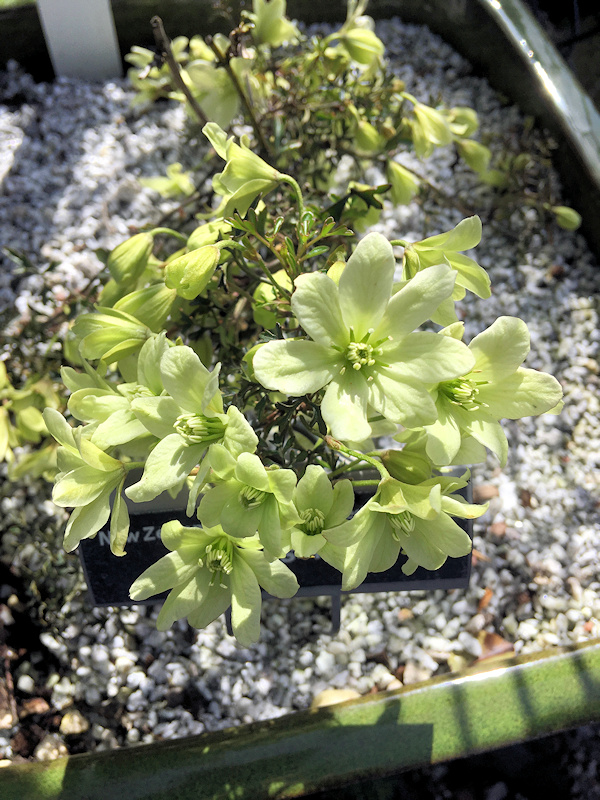
C. 'Pixie' taken in 2018
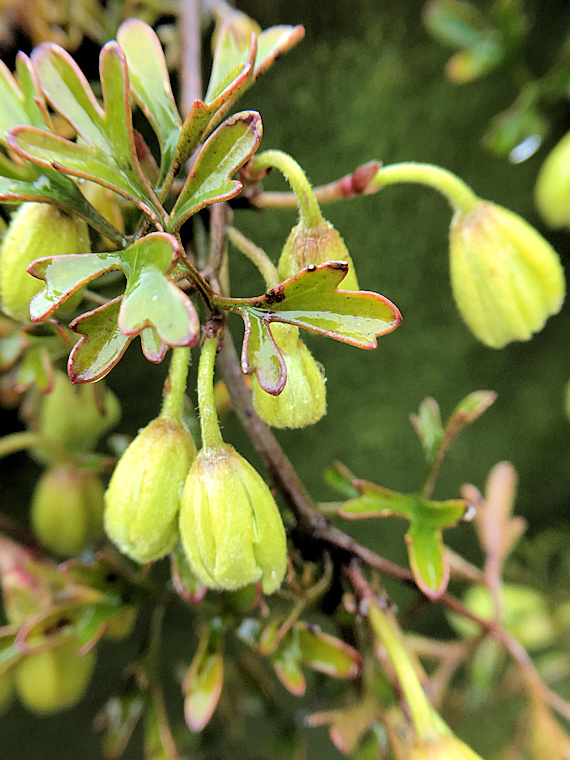 C. 'Pixie', flower buds opening |
 C. 'Pixie' flowering |
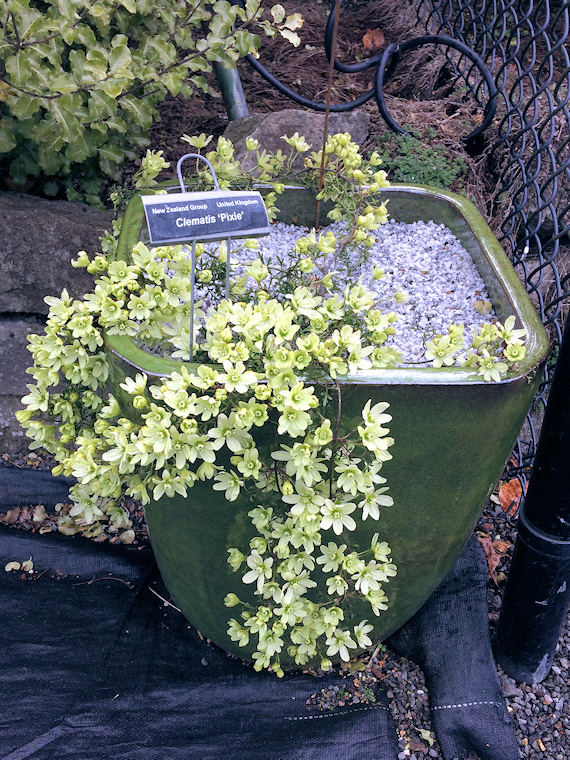 C. 'Pixie' makes a wonderful display in a pot |
|
Given its resemblance to C. ×cartmanii hybrids such as C. ×cartmanii 'Joe' and C. ×cartmanii 'Lunar Lass', you may well wonder why Clematis 'Pixie' does not have the ×cartmanii as part of its name. As I understand it, the tale unfolds as follows. In the early 1980's Joe Cartman, who was then an engineer for the City of Christchurch on the South Island of New Zealand, sent a variety of New Zealand species clematis seeds to friends in the UK. He had already created his original hybrid, C. ×cartmanii. Seed of that was sent as well. It became the form for the recipients of Joe's largesse to use C. ×cartmanii with a cultivar name to distinguish those first-generation hybrids of the species sent by Joe. The species seed sent included C. petriei, C. marmoraria, C. marata, and C. paniculata. (As Joe informed me when I had the chance to meet him in November 2024, the species from New Zealand must be used as soon as seed is received. It is not long-lived. Those recipients in the UK must have started sowing within days of their arrival.) C. 'Pixie' is the next generation after the first round of C. ×cartmanii hybrids were named. It's breeder, G. Hutchins, created C. 'Pixie' after making a first round of hybrids that included a series with C. petriei as the seed parent. These became part of the County Park Hybrids, out of County Park Nursery in Hampshire. So, C. 'Pixie' is "younger" than those first hybrids honoring Joe Cartman. C. 'Pixie' may be said to be a sturdier version of C. ×cartmanii 'Lunar Lass', or a demurer version of C. 'Early Sensation'. As with so many crosses of New Zealand clematis, the presence of C. marmoria genetics is strongly felt in the stiff parsley-like foliage and the general inability to climb. C. 'Pixie' is a superb draper from containers (to 1 meter), or let it scramble along the ground in a rock garden. The 3-4cm wide flowers start quite green but do turn white more quickly than C. ×cartmanii 'Lunar Lass', especially if the spring weather is warm. C. 'Pixie' blooms in March and into early April. In our experience at the Rogerson Clematis Garden, C. 'Pixie' and all its C. ×cartmanii and C. petriei progenitors prefer free-draining soil at a neutral or slightly higher pH. We have created large, deep planters for New Zealand/Australian clematis display, adding pumice and crushed limestone (the type used for raising poultry) in the soil mix. None of these clematis hybrids or straight species, last at all if planted into our native, slightly acidic clay soil. No matter how well amended, the clay will infiltrate back into the root zone, with fatal effects. Hence, our mighty, interlocking cement block planters with a soil barrier over one meter below the soil surface to keep the clay from moving up. We propagate C. 'Pixie' in November, taking multiple node cuttings stuck into perlite. That timing was suggested by Joe Cartman, more excellent advice from a gentleman who has made knowing and growing the New Zealand clematis (and other types of plants as well) the hobby of his retirement years. Both Joe Cartman and County Park Nursery are alive and well. C. 'Pixie' taken in 2018
C. 'Pixie', flower buds opening
C. 'Pixie' flowering
C. 'Pixie' makes a wonderful display in a pot
 Linda Beutler